

Size is only the starting point for selection
The diameter of 18650 is about 18mm and the length is about 65mm; the diameter of 21700 is about 21mm and the length is about 70mm. 21700 can generally accommodate more active material in a single cell, but there are still significant differences in capacity, internal resistance, and discharge capabilities between models.
Five Conditions to Compare
- Installation space:Can the battery compartment accommodate cells, brackets, nickel sheets, insulation, BMS and necessary structural clearances.
- Capacity and running time:The energy required for the entire package determines the number of parallel connections, and you cannot just look at the capacity of a single unit.
- Sustained vs. peak load:Motors, actuators and communication devices can have completely different peak durations.
- Weight and construction:A single larger battery cell does not necessarily make the entire package heavier, nor does it necessarily reduce all structural components.
- Supply and Verification:Confirm model information, batches, sample testing and subsequent supply plans.
When Each Format Makes Sense
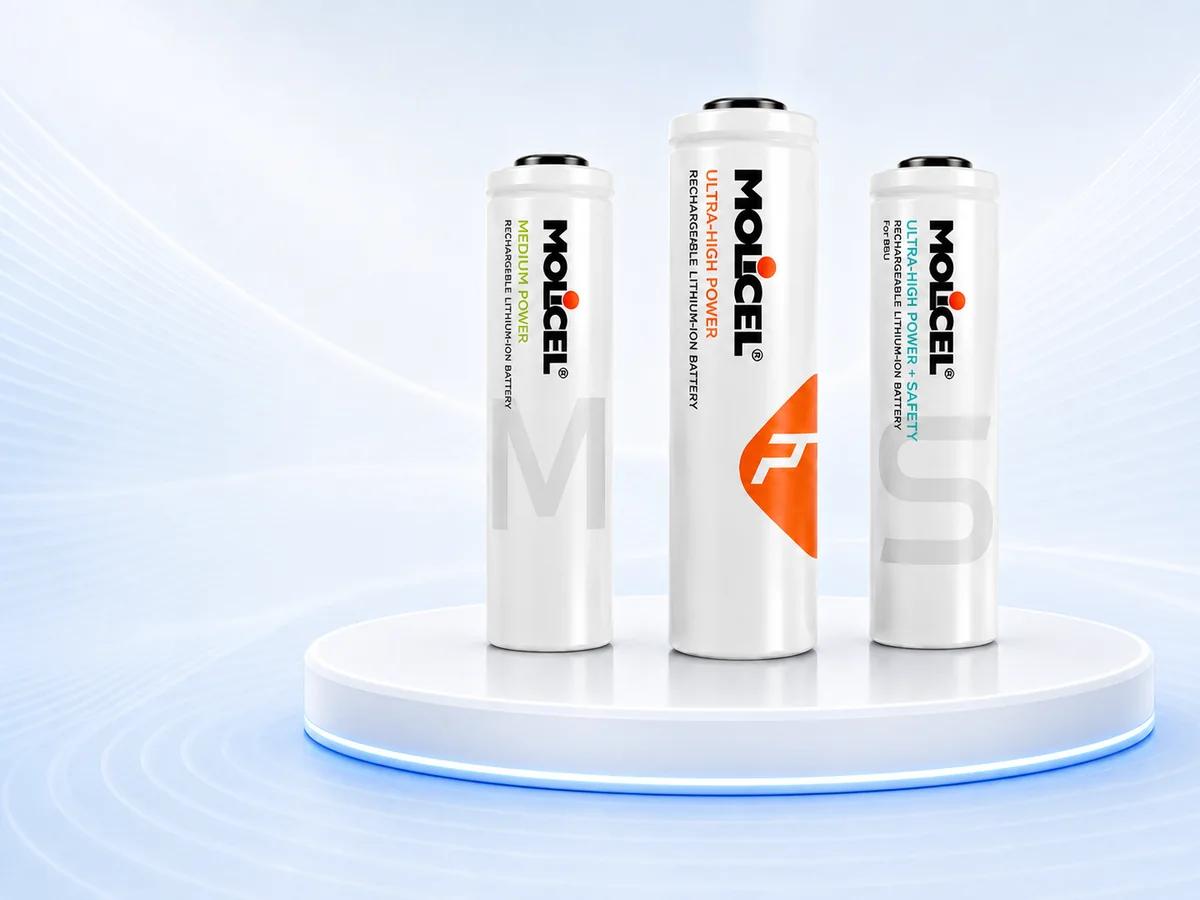
When space is limited, an existing structure is already designed around the 18650, or a specific 18650 model is required, start with the 18650 catalog. In a Molicel shortlist, compare the 18650 INR-18650-P22S and INR-18650-P30S. When a project needs to compare energy per unit, parallel count or another capacity-and-power balance, start with 21700 candidates such as INR-21700-P50S, INR-21700-P60C and INR-21700-M65A. Final selection must follow the applicable data sheet and pack operating conditions.